


Ask the Expert: Your Seasonal Flock Questions, Answered
Starting a Flock : Environment
Flock Management : Flock Health
Flock Management : Layer Nutrition
Flock Management : Egg Production

Layer feeds, molting and seasonal transitions on your mind? As a flock owner, there’s a lot to keep track of — which is why we reached out to Purina Nutritionist and Flock Expert Patrick Biggs, Ph.D. Here are his answers to some common chicken-keeping questions.
I recommend having your timer come on in the morning, especially if your chickens are outside during the day and make their way back to the coop at night. Birds will stay put wherever they are when it gets dark. You don’t want to risk extending the day’s length into the night and having your lights shut off while your chickens are still outside, leaving them vulnerable to predators. If you have the light on before the sun comes up, then the natural sunset will help put your flock to bed.
You can also consider installing tarps around two to three sides of your run to help reduce the amount of wind gusts. If your winters are harsh, tarps also can help keep freezing rain and snow out of your coop. These wind blocks should go down to the ground where your birds will be. Each chicken is only about a foot tall, after all!
If you’re using tarps, remember it’s important not to block airflow inside your coop. If you start to see condensation forming on the walls, that means you're not moving enough air.
Your chickens will do their part, scratching, aerating and turning over the bedding. This method also generates some heat to keep the floor more comfortable during the winter.
Here are my simple rules for weathering winter with chickens: keep them dry, keep them out of the wind and make sure that they always have food and water.
If you raised spring chicks and haven’t yet transitioned them to a layer feed, remember to do so at 18 weeks of age or when they lay their first eggs, whichever comes first. If you’re unsure what layer feed makes the most sense for your flock, I recommend looking into Purina® Layena® 16% Protein Layer Feeds. These complete layer feeds are designed to maximize egg production and quality. Plus, like all of Purina’s complete layer feeds, they are formulated with the Flock Strong™ System to support all-around bird health.
If you try to measure the right amount of food to put out in the morning and at night, you might inadvertently cause some pecking order problems. Your flock will quickly learn there's a limited supply of feed that's coming in every day. The more aggressive birds will gorge themselves to make sure that they're getting plenty to eat, and the birds at the bottom won’t get the nutrition they need. That’s why the best plan is to always have plenty of feed available, so your hens can continually eat throughout the day.
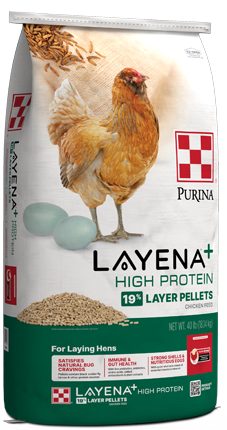
It’s common for backyard flock owners to have different ages of birds, so the hens may not all molt at the same time. To meet the needs of the hens that are molting and the needs of hens that are still laying eggs within the same flock, it is recommended to use Purina® Layena® High Protein Layer Hen Feed. The 19% protein in the feed provides more protein to help those hens that are regrowing feathers, and laying hens still will get the calcium they need.
Interested in trying one of the Purina Complete Layer Feeds Dr. Biggs recommended? Sign up now and get $10 off your first bag.
Q: How can I keep egg production steady going into the fall and winter?
A: Egg laying is dependent on day length, so if you want your chickens to continue laying eggs into the late fall and through the winter, you’ll need to provide supplemental light. I recommend prepping your coop lighting setup as early as August or September because once the day’s length starts to decrease, your chickens’ bodies will begin shutting down egg production. Less daylight is nature’s signal that winter is coming, and it's no longer the time to be trying to raise baby chickens.Q: How much light is needed to sustain winter egg production?
A: You’ll want at least 16 hours of light to stop the seasonal egg slowdown. It can be a combination of natural and artificial light. It’s easiest to stick to a consistent schedule if you install a timer. It also doesn’t take a lot of light — you only need one incandescent 25-watt or LED 3- to 9-watt bulb per 100 square feet of coop space.I recommend having your timer come on in the morning, especially if your chickens are outside during the day and make their way back to the coop at night. Birds will stay put wherever they are when it gets dark. You don’t want to risk extending the day’s length into the night and having your lights shut off while your chickens are still outside, leaving them vulnerable to predators. If you have the light on before the sun comes up, then the natural sunset will help put your flock to bed.
Q: What’s the best way to prepare my coop for cold weather?
A: It’s always good to start thinking about coop maintenance while it’s still warm outside. Look for places where drafts might come in and patch those holes.You can also consider installing tarps around two to three sides of your run to help reduce the amount of wind gusts. If your winters are harsh, tarps also can help keep freezing rain and snow out of your coop. These wind blocks should go down to the ground where your birds will be. Each chicken is only about a foot tall, after all!
If you’re using tarps, remember it’s important not to block airflow inside your coop. If you start to see condensation forming on the walls, that means you're not moving enough air.
Q: What’s the deep litter method?
A: The deep litter method is a low-maintenance system that essentially creates a compost pile inside your coop. Start with a clean coop and add a thick layer of bedding. Then, instead of regularly removing and replacing bedding as manure accumulates, you simply add a fresh layer of bedding on top. You may need to spot-check things occasionally to make sure there are no excessive wet or dirty spots.Your chickens will do their part, scratching, aerating and turning over the bedding. This method also generates some heat to keep the floor more comfortable during the winter.
Q: Do my chickens need supplemental heat in winter?
A: No. Chickens tolerate cold well. People tend to worry about their birds when it gets really cold because we can't tolerate the cold weather; but a chicken’s body temperature is 106°F to 108 °F, it has feathers to insulate its body and its exposed body parts can tolerate cold as long as you can keep them dry.Here are my simple rules for weathering winter with chickens: keep them dry, keep them out of the wind and make sure that they always have food and water.
Q: Do I need to change my feed routine heading into colder weather?
A: No changes or special supplements are needed beyond offering a complete layer feed, which provides everything required.If you raised spring chicks and haven’t yet transitioned them to a layer feed, remember to do so at 18 weeks of age or when they lay their first eggs, whichever comes first. If you’re unsure what layer feed makes the most sense for your flock, I recommend looking into Purina® Layena® 16% Protein Layer Feeds. These complete layer feeds are designed to maximize egg production and quality. Plus, like all of Purina’s complete layer feeds, they are formulated with the Flock Strong™ System to support all-around bird health.
Q: Do chickens eat more during the winter?
A: Feed intake increases about 10-15% in winter as birds eat more to generate body heat. Also, chickens are not meal eaters. They’re grazers, meaning they’ll eat continuously throughout the day, and they are not going to overeat; they eat to meet their nutrient requirements.If you try to measure the right amount of food to put out in the morning and at night, you might inadvertently cause some pecking order problems. Your flock will quickly learn there's a limited supply of feed that's coming in every day. The more aggressive birds will gorge themselves to make sure that they're getting plenty to eat, and the birds at the bottom won’t get the nutrition they need. That’s why the best plan is to always have plenty of feed available, so your hens can continually eat throughout the day.
Q: Help! My hens are losing their feathers. What’s wrong?
A: Most likely, if you’re noticing feather loss or a feather-quality dip on otherwise healthy birds, they’re going through molt. Molting usually occurs in the fall when the hours of sunlight decrease, but molting can happen any time throughout the year. Hens’ bodies tell them to take a vacation from laying eggs and redirect their energy to feather regrowth. You’ll generally first notice feather loss around 18 months of age, and it’ll happen again each year.It’s common for backyard flock owners to have different ages of birds, so the hens may not all molt at the same time. To meet the needs of the hens that are molting and the needs of hens that are still laying eggs within the same flock, it is recommended to use Purina® Layena® High Protein Layer Hen Feed. The 19% protein in the feed provides more protein to help those hens that are regrowing feathers, and laying hens still will get the calcium they need.
Q: Do I need to transition my chickens to a new feed during molt and then transition back to their regular feed?
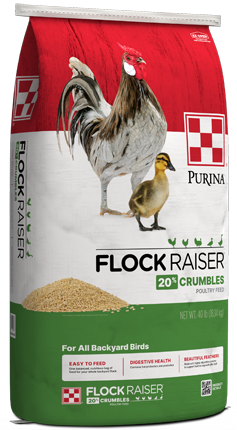
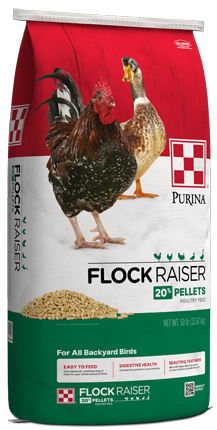
A: If the whole flock is going through a molt, then you can transition them to a higher protein feed, like Purina® Flock Raiser®, to allow those birds to focus on regrowing feathers, and then transition them back to a layer feed in about four weeks to get them back into egg-laying mode. Determine what makes sense for your flock at the moment; do what feels right for you and your flock.Interested in trying one of the Purina Complete Layer Feeds Dr. Biggs recommended? Sign up now and get $10 off your first bag.