


Which Layer Feed Is Right for Your Hens?
Flock Management : Flock Health
Flock Management : Layer Nutrition
Flock Management : Egg Production

To help break down the ins and outs of layer feeds, we sat down with Purina Nutritionist and Flock Expert Patrick Biggs, Ph.D., to get some practical advice on finding the right fit for you and your flock.
A good place to start is with some quick chicken feed basics. For the first 18 weeks of your chicks’ lives, their nutritional requirements are focused on developing into happy, healthy hens. Opting for a starter feed and then transitioning them to a grower feed around 4-5 weeks of age will give them what they need.
And because time goes fast when you’re having fun raising a flock, it takes just 18 short weeks for your chickens to officially enter adulthood, and their nutrition needs to change. At this point, you’ve got an important decision to make — switching to a layer feed that is right for your ladies.
“A layer feed is important for hens because if you want to get eggs, you have to feed them the right nutrition,” Dr. Biggs said.
Layer feeds contain more calcium than starter or grower feeds. If chickens don’t have the correct amount of calcium in their diet, they aren’t going to be able to make strong eggshells. Plus, Dr. Biggs notes that layer feeds also help maintain consistent egg production.
All of our complete layer feeds provide the right balance of nutrients, vitamins and minerals (calcium included), so you can’t go wrong. But based on your goals for your flock, you can start narrowing the options. Just as no two eggs are exactly alike, not all flock owners have the same goals. But a few common themes can help point you in the right direction.
Here are a few questions to ask yourself, along with Dr. Biggs’ layer feed recommendation to match.
“There are a lot of opportunities for eggs to break. After a chicken lays her egg in the nest box, she might kick it and knock it against another egg as she stands up and moves around,” Dr. Biggs added. “There’s also a lot of movement when you come in to pick up and collect eggs. As you're putting them in a basket, they get jostled around. We're trying to make sure your birds get the right calcium in their feed to keep those eggs as strong as possible.”
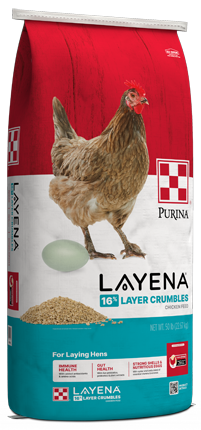
For a diet that provides all the nutrition your bird needs in every bite she takes, take a look at Purina® Layena® 16% Protein Layer Feed.
“The Layena 16% Protein Layer Feed includes the Oyster Strong® System with oyster shell, vitamin D and manganese, so you’re getting the right nutrients into the birds to keep those shells as strong as possible,” Dr. Biggs said.
Available in three forms (pellets, crumbles and pearls), each option provides a balance of protein, calcium, vitamins and minerals, so choosing the right form simply comes down to what works best for you and your flock. If you’re not sure what route to take, any form of the 16% Protein Layer Feed is a great place to start.
One final piece of advice: follow the 90/10 rule.
“As you start feeding other things to the birds, such as providing them with scratch grains, treats and table scraps, you start diluting that nutrition down,” Dr. Biggs added. “The feed itself is designed to provide every nutrient the birds need to be healthy and maintain egg production.”
“Regardless of the color of the yolk, the nutrition of the egg is going to be the same,” Dr. Biggs noted. Providing a complete and balanced diet to your flock ensures that they are getting the best nutrition, which means that the eggs will be nutritious for you and your family.
“Yolk colors can range from pale white up to almost orange with a reddish tint, depending on what the bird is eating.”
But you can influence the amount of omega-3 fatty acids in the egg by selecting a layer feed with added sources, such as Purina® Layena® Omega-3 16% Protein Layer Feed.
“This feed is formulated to provide omega-3 fatty acids to the birds so that their eggs will also contain more omega-3 than a typical egg,” he said. “It takes about three weeks for the omega-3 content to hit its peak amount in the egg, and you’ll have to continually keep your bird on this feed to keep the levels up.”
If you’re looking to provide organic eggs for your family, a good option is Purina® Organic Layer Pellets or Crumbles. This complete feed is USDA-certified organic and made with non-GMO ingredients grown without pesticides or fertilizers.
One quick note about potentially selling these eggs: you’ll have eggs from laying hens fed organic chicken feed, but the birds and their eggs will not be considered “certified organic.” Those rules are more in-depth and will require extra research.
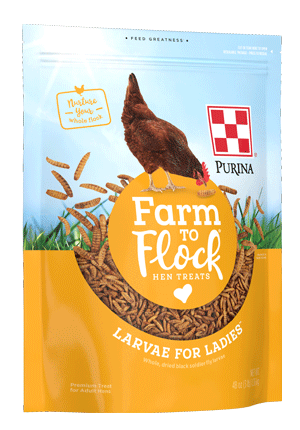
“If you enjoy seeing colors and variety from the whole seeds, grains and vegetables, then Farm to Flock® is the way to go,” Dr. Biggs added.
Purina® Farm to Flock® 18% Protein Layer Food is a textured food, meaning it combines whole grains, seeds and other recognizable ingredients with pellets. This type of feed provides good nutrition, but the chickens can choose what they want to eat; and they don't always make the right choices.
“If your goal is to maximize performance, a textured feed is not going to give you the absolute best performance because the birds have the ability to choose what they want,” Dr. Biggs said. “It's like going to a salad bar or a buffet. You can load up your salad with what tastes the best, which often means it’s not the most nutritious! They are still going to get good nutrition, just not enough to support that maximum amount of egg production.”
One bonus: chickens are naturally inquisitive and use their beaks to explore. The whole-food ingredients can encourage your chickens’ natural instincts, keeping them happy, healthy and pecking the day away.
Remember, a little patience goes a long way, and it may take some time to see results.
“If you're switching to a high-quality feed, typically it’ll take one to three weeks for you to start to see effects,” Dr. Biggs added. “You may start to see changes in activity levels or feather quality change a little more quickly.”
Ultimately, selecting the right layer feed comes down to what works for you and your flock.
“All of these feeds have a place,” Dr. Biggs noted. “You just have to decide what works best, what you want for your birds and your family and go from there.”
Need a little more guidance? Use the Purina feed finder to find the right layer feed for your flock.
Layer Feed Basics
Whether this is your first year with chickens or you’ve been steadily growing your backyard flock, picking a layer feed isn’t always a straightforward choice. There are different ingredients to consider, varying textures, different protein levels...the list keeps going. So, if you’ve ever found yourself second-guessing a decision in the feed aisle, rest assured; you aren’t alone.A good place to start is with some quick chicken feed basics. For the first 18 weeks of your chicks’ lives, their nutritional requirements are focused on developing into happy, healthy hens. Opting for a starter feed and then transitioning them to a grower feed around 4-5 weeks of age will give them what they need.
And because time goes fast when you’re having fun raising a flock, it takes just 18 short weeks for your chickens to officially enter adulthood, and their nutrition needs to change. At this point, you’ve got an important decision to make — switching to a layer feed that is right for your ladies.
“A layer feed is important for hens because if you want to get eggs, you have to feed them the right nutrition,” Dr. Biggs said.
Layer feeds contain more calcium than starter or grower feeds. If chickens don’t have the correct amount of calcium in their diet, they aren’t going to be able to make strong eggshells. Plus, Dr. Biggs notes that layer feeds also help maintain consistent egg production.
All of our complete layer feeds provide the right balance of nutrients, vitamins and minerals (calcium included), so you can’t go wrong. But based on your goals for your flock, you can start narrowing the options. Just as no two eggs are exactly alike, not all flock owners have the same goals. But a few common themes can help point you in the right direction.
Here are a few questions to ask yourself, along with Dr. Biggs’ layer feed recommendation to match.
Are Eggs Your Top Priority?
If your main goal is gathering eggs, then calcium is the name of the game. If your hens aren’t getting the amounts they need, you’ll likely notice fewer eggs and/or weaker shells.“There are a lot of opportunities for eggs to break. After a chicken lays her egg in the nest box, she might kick it and knock it against another egg as she stands up and moves around,” Dr. Biggs added. “There’s also a lot of movement when you come in to pick up and collect eggs. As you're putting them in a basket, they get jostled around. We're trying to make sure your birds get the right calcium in their feed to keep those eggs as strong as possible.”
For a diet that provides all the nutrition your bird needs in every bite she takes, take a look at Purina® Layena® 16% Protein Layer Feed.
“The Layena 16% Protein Layer Feed includes the Oyster Strong® System with oyster shell, vitamin D and manganese, so you’re getting the right nutrients into the birds to keep those shells as strong as possible,” Dr. Biggs said.
Available in three forms (pellets, crumbles and pearls), each option provides a balance of protein, calcium, vitamins and minerals, so choosing the right form simply comes down to what works best for you and your flock. If you’re not sure what route to take, any form of the 16% Protein Layer Feed is a great place to start.
One final piece of advice: follow the 90/10 rule.
“As you start feeding other things to the birds, such as providing them with scratch grains, treats and table scraps, you start diluting that nutrition down,” Dr. Biggs added. “The feed itself is designed to provide every nutrient the birds need to be healthy and maintain egg production.”
Interested in Adding Nutrition to Your Eggs?
A common misconception is that darker yolks mean more nutritious eggs.“Regardless of the color of the yolk, the nutrition of the egg is going to be the same,” Dr. Biggs noted. Providing a complete and balanced diet to your flock ensures that they are getting the best nutrition, which means that the eggs will be nutritious for you and your family.
“Yolk colors can range from pale white up to almost orange with a reddish tint, depending on what the bird is eating.”
But you can influence the amount of omega-3 fatty acids in the egg by selecting a layer feed with added sources, such as Purina® Layena® Omega-3 16% Protein Layer Feed.
“This feed is formulated to provide omega-3 fatty acids to the birds so that their eggs will also contain more omega-3 than a typical egg,” he said. “It takes about three weeks for the omega-3 content to hit its peak amount in the egg, and you’ll have to continually keep your bird on this feed to keep the levels up.”
Looking For an Organic Feed Option?
Both conventional and organic feed options produce healthy, nutritious eggs and provide the same nutritional value. The main difference is how the ingredients are sourced. For chicken feed to be considered organic, all ingredients must be raised and manufactured according to the requirements established by the National Organic Program.If you’re looking to provide organic eggs for your family, a good option is Purina® Organic Layer Pellets or Crumbles. This complete feed is USDA-certified organic and made with non-GMO ingredients grown without pesticides or fertilizers.
One quick note about potentially selling these eggs: you’ll have eggs from laying hens fed organic chicken feed, but the birds and their eggs will not be considered “certified organic.” Those rules are more in-depth and will require extra research.
Want to See Whole Ingredients?
If your backyard flock is primarily made up of feathered friends and peak egg production isn’t top of mind, you can still give your hens the nutrition they need while adding some variety.“If you enjoy seeing colors and variety from the whole seeds, grains and vegetables, then Farm to Flock® is the way to go,” Dr. Biggs added.
Purina® Farm to Flock® 18% Protein Layer Food is a textured food, meaning it combines whole grains, seeds and other recognizable ingredients with pellets. This type of feed provides good nutrition, but the chickens can choose what they want to eat; and they don't always make the right choices.
“If your goal is to maximize performance, a textured feed is not going to give you the absolute best performance because the birds have the ability to choose what they want,” Dr. Biggs said. “It's like going to a salad bar or a buffet. You can load up your salad with what tastes the best, which often means it’s not the most nutritious! They are still going to get good nutrition, just not enough to support that maximum amount of egg production.”
One bonus: chickens are naturally inquisitive and use their beaks to explore. The whole-food ingredients can encourage your chickens’ natural instincts, keeping them happy, healthy and pecking the day away.
Don’t Be Afraid to Do a Trial Run
Next time you find yourself standing in the feed aisle, deciding which bag to grab, don’t be afraid to try something new. You can even sign up for a trial to save money on your first bag.Remember, a little patience goes a long way, and it may take some time to see results.
“If you're switching to a high-quality feed, typically it’ll take one to three weeks for you to start to see effects,” Dr. Biggs added. “You may start to see changes in activity levels or feather quality change a little more quickly.”
Ultimately, selecting the right layer feed comes down to what works for you and your flock.
“All of these feeds have a place,” Dr. Biggs noted. “You just have to decide what works best, what you want for your birds and your family and go from there.”
Need a little more guidance? Use the Purina feed finder to find the right layer feed for your flock.