


Is Your Chick a Pullet or Cockerel? Frequently Asked Teenage Chicken Questions
Starting a Flock : Chick Nutrition
Starting a Flock : Caring for Chicks

Just as our teenage years are pivotal in helping shape the rest of our lives, the teenage stage also is important for backyard chickens since it plays a key role in your birds’ futures.
Many families enjoy teenage chickens after purchasing baby chicks at local Purina retailers. In a matter of a few weeks, chicks go from cute cotton balls to pin-feathered chickens adjusting to their long legs and new feathers.
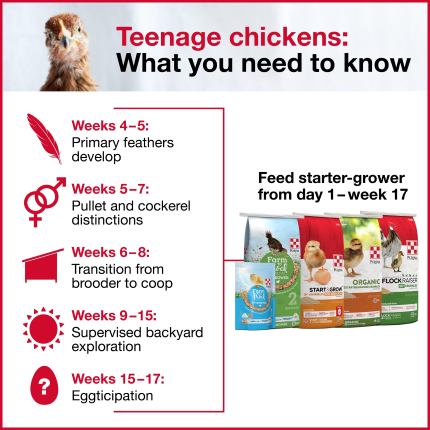
Backyard chickens are considered teenagers from 4 to 17 weeks of age. The teenage chicken stage isn’t talked about much in the backyard chicken world, but it’s a very important growth phase. These weeks are a lot of fun - they’re filled with quick growth, defined personalities and backyard exploration.
Since exciting changes can be seen during this phase, there are often many questions. Here are three of the most common questions we receive when it comes to teenage chickens:
Between 5-7 weeks of age, you should be able to begin visually distinguishing males from females. If you are still uncertain of gender, you’ll be sure who the males are when you hear them attempting to crow.
Here are tips for transitioning birds from the brooder box to the coop between the age of 6 to 8 weeks:
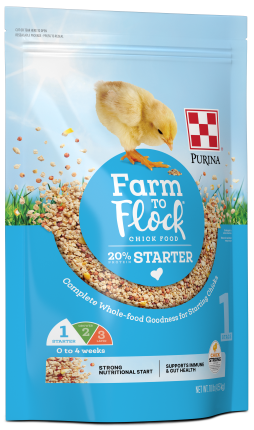
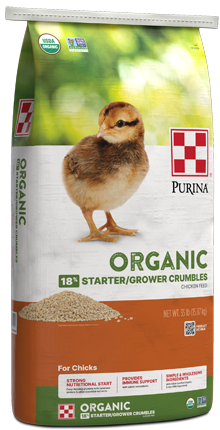
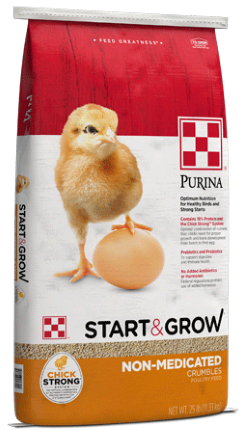
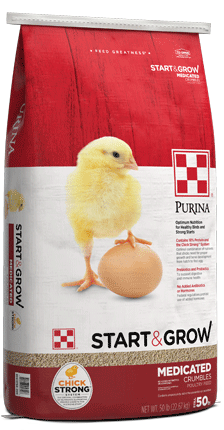
Continue feeding a complete chick starter feed, such as Purina® Start & Grow® Non-Medicated or Purina® Start & Grow® Medicated, Purina® Organic Starter-Grower, or Purina® Flock Raiser®, through 18 weeks of age. Starter-grower feeds are higher in protein and lower in calcium than layer feeds. Look for a starter-grower feed with 18% protein and no more than 1.25% calcium for laying breeds. Meat birds and mixed flocks should be fed a diet containing at least 20% protein.
You also might consider a dedicated Grower food to bridge the gap between chick and layer. Purina® Farm to Flock® Grower food is exactly that — a feed that chicks can start eating at weeks 4 to 6 of age, beak size-permitting, that supports growth, immunity and gut health in this transitional phase.
Too much calcium can have a detrimental effect on growth, but a complete starter-grower feed has just the right balance for growing birds. The building blocks birds receive from their feed are put into growing feathers, muscles and bones. Prebiotics and probiotics support immune and digestive health, while added marigold extract promotes brightly colored beaks and leg shanks.
Ideally, wait until birds are 18 weeks old before introducing treats and scratch. It is important birds receive proper nutrition in early development. If you can’t wait to spoil your birds, then wait until the flock is at least 12 weeks old. Keep the treats and scratch to a minimum – no more than 10% of total daily intake from treats to maintain nutritional balance.
Feeding growing birds is simple. After moving birds to the coop, continue feeding a complete starter-grower feed and complement with scratch for a treat. Then, watch your pullets and cockerels grow and change each day. Once your birds outgrow their teenage stage, you’ll be one step closer to the transition to egg-laying hens.
If you have more questions about your growing chicks, check out our Chick Care Guide for great tips and answers.
Many families enjoy teenage chickens after purchasing baby chicks at local Purina retailers. In a matter of a few weeks, chicks go from cute cotton balls to pin-feathered chickens adjusting to their long legs and new feathers.
Backyard chickens are considered teenagers from 4 to 17 weeks of age. The teenage chicken stage isn’t talked about much in the backyard chicken world, but it’s a very important growth phase. These weeks are a lot of fun - they’re filled with quick growth, defined personalities and backyard exploration.
Since exciting changes can be seen during this phase, there are often many questions. Here are three of the most common questions we receive when it comes to teenage chickens:
How do you tell if a chick is male or female?
Look at their feathers. Male teenage chickens, known as cockerels, tend to develop their combs and wattles earlier than females, which are called pullets. Cockerels developing tail feathers are usually bigger, while pullets are overall smaller in size. That said, a female’s primary flight feathers on her wings are generally longer.Between 5-7 weeks of age, you should be able to begin visually distinguishing males from females. If you are still uncertain of gender, you’ll be sure who the males are when you hear them attempting to crow.
When is it time to move chicks into a coop?
Keep chicks in the brooder box until week 6. As chicks grow in the brooder, keep birds comfortable by providing one to two square feet per bird. The temperature should be between 70 to 75 degrees Fahrenheit to help them get ready to move outside. Your chicks require less heat because they are now larger and can better regulate their body temperatures.Here are tips for transitioning birds from the brooder box to the coop between the age of 6 to 8 weeks:
- Remove supplemental heat.
- Move brooder into the coop.
- Release chicks into the coop with the brooder still available for an option.
- Supervise chicks outside of the coop in small increments.
- Keep young chicks separate from older birds until they reach the same size - typically around 16 weeks of age.
How long do you feed chicks starter food?
Keep the feeding program similar from day one through week 18. As birds grow, many new flock raisers wonder about switching feeds.Continue feeding a complete chick starter feed, such as Purina® Start & Grow® Non-Medicated or Purina® Start & Grow® Medicated, Purina® Organic Starter-Grower, or Purina® Flock Raiser®, through 18 weeks of age. Starter-grower feeds are higher in protein and lower in calcium than layer feeds. Look for a starter-grower feed with 18% protein and no more than 1.25% calcium for laying breeds. Meat birds and mixed flocks should be fed a diet containing at least 20% protein.
You also might consider a dedicated Grower food to bridge the gap between chick and layer. Purina® Farm to Flock® Grower food is exactly that — a feed that chicks can start eating at weeks 4 to 6 of age, beak size-permitting, that supports growth, immunity and gut health in this transitional phase.
Too much calcium can have a detrimental effect on growth, but a complete starter-grower feed has just the right balance for growing birds. The building blocks birds receive from their feed are put into growing feathers, muscles and bones. Prebiotics and probiotics support immune and digestive health, while added marigold extract promotes brightly colored beaks and leg shanks.
Ideally, wait until birds are 18 weeks old before introducing treats and scratch. It is important birds receive proper nutrition in early development. If you can’t wait to spoil your birds, then wait until the flock is at least 12 weeks old. Keep the treats and scratch to a minimum – no more than 10% of total daily intake from treats to maintain nutritional balance.
Feeding growing birds is simple. After moving birds to the coop, continue feeding a complete starter-grower feed and complement with scratch for a treat. Then, watch your pullets and cockerels grow and change each day. Once your birds outgrow their teenage stage, you’ll be one step closer to the transition to egg-laying hens.
If you have more questions about your growing chicks, check out our Chick Care Guide for great tips and answers.